May 30, 2024
Stacking DAO: The Next Lido and Jito?
May 30, 2024
Lido and Jito are the largest Liquid Staking solutions on Ethereum and Solana with TVLs of $36B+ and $1.8B+ respectively.
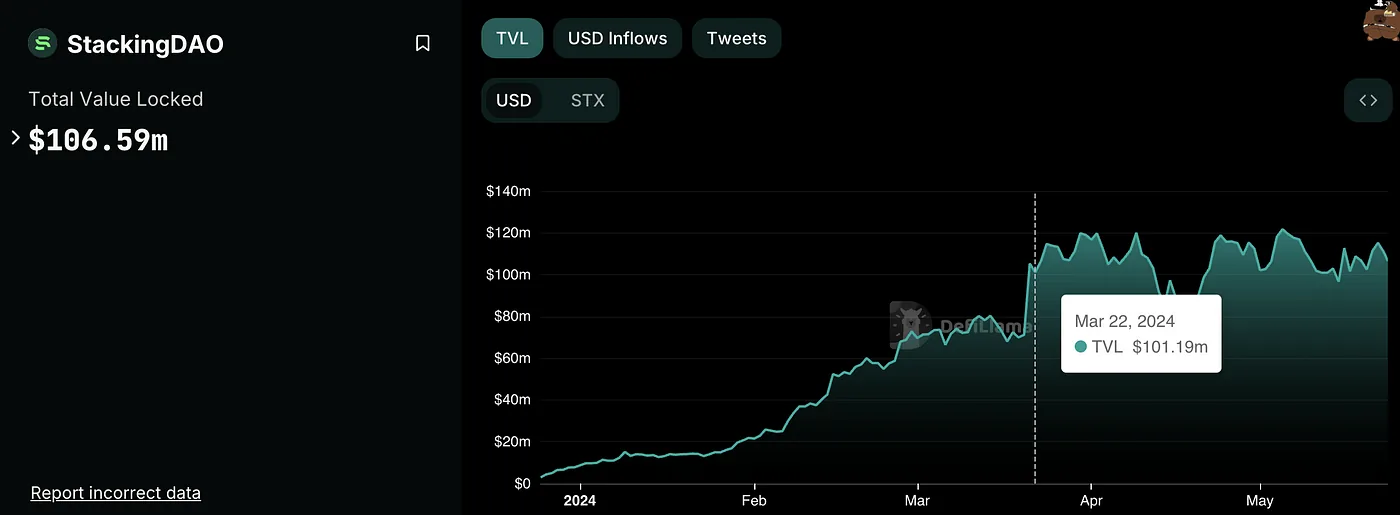
Stacking DAO sits at $100M in TVL, but is there a way for the protocol to reach the giant Liquid Staking apps?
As always, the answer lies in analyzing the growth and metrics of the current leaders and comparing them with Stacking DAO rise since launch.
Jito is the most successful Liquid Staking service on Solana right now and already has a token out.
But did you know it took them 1 year to reach a $70M TVL?
On October 2023, 2.94M SOL was deposited on Jito, and the price of SOL was around $24, which means $70M.
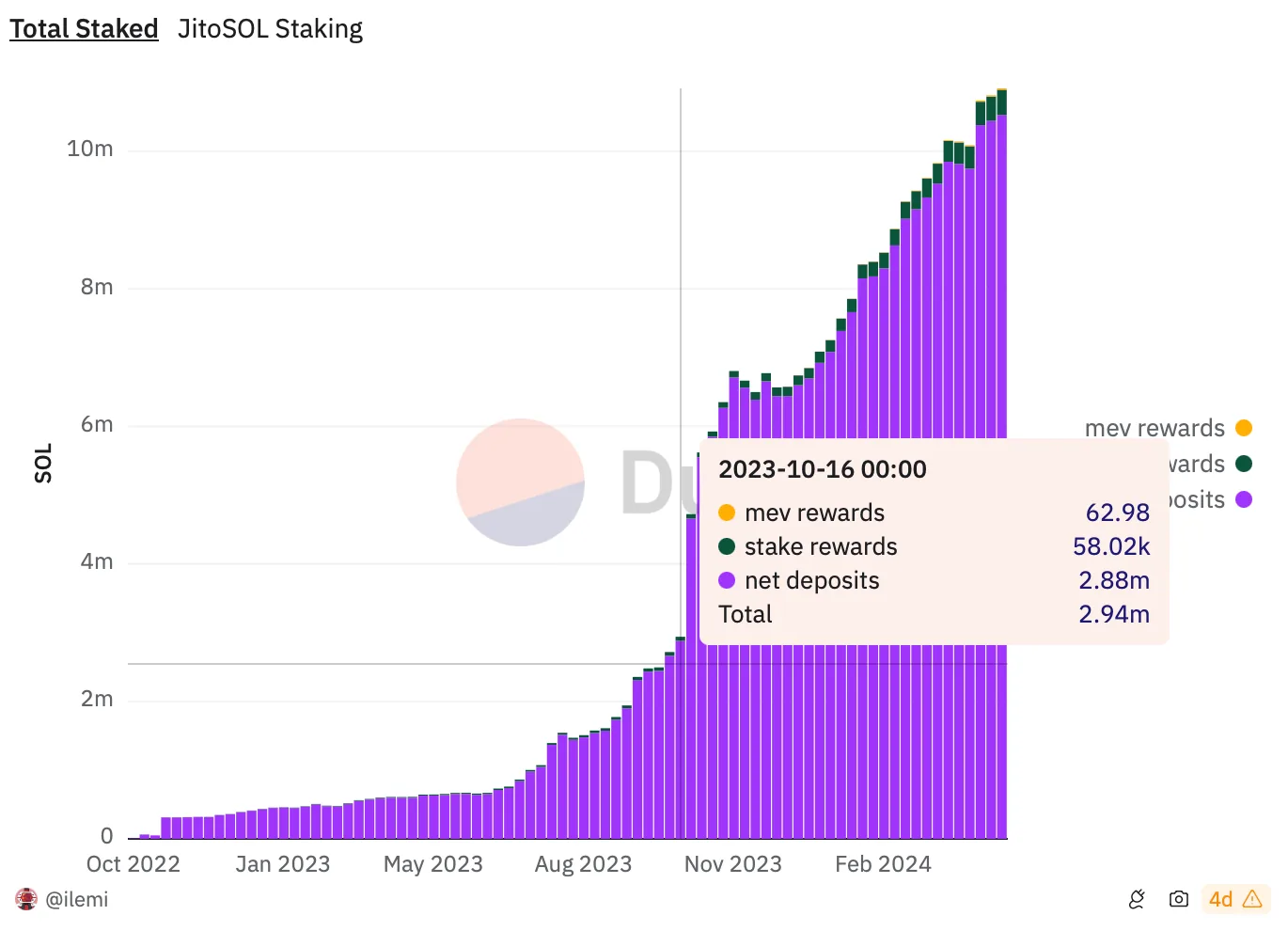
In contrast, Stacking DAO reached a $100M+ TVL in just 4 months since its launch.
Obviously, token price plays an important factor in TVL numbers;
So, let’s compare tokens staked with Liquid Stacking protocols to the total amount staked in an ecosystem.

This data showcases the strong start of Stacking DAO with respect to Jito.
There are reasons why Solana LSD represents a smaller amount of the total staked, but Solana is still a bigger ecosystem than Stacks.
Stacking DAO still has a large growth margin to reach Lido-levels of staking market share. To do that, it would need to double the amount of STX deposited in the protocol.
Also, the % of Stacked tokens on Stacks is much lower than ecosystems like Solana, so we could expect higher staking levels in the future.
This analysis wouldn’t be complete without considering the ecosystem in which the Liquid Staking projects are based.
The whole point of Liquid Stacking is making stacked tokens liquid again so that the funds can be used across DeFi and dApps.
Right now, ~30% of Stacking DAO TVL ($30M) is deployed across Stacks DeFi protocols such as Zest, Bitflow, Velar, and Hermetica.
How does it fare against JitoSOL and stETH usage?
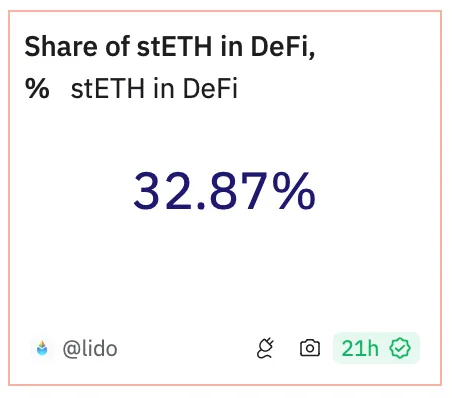
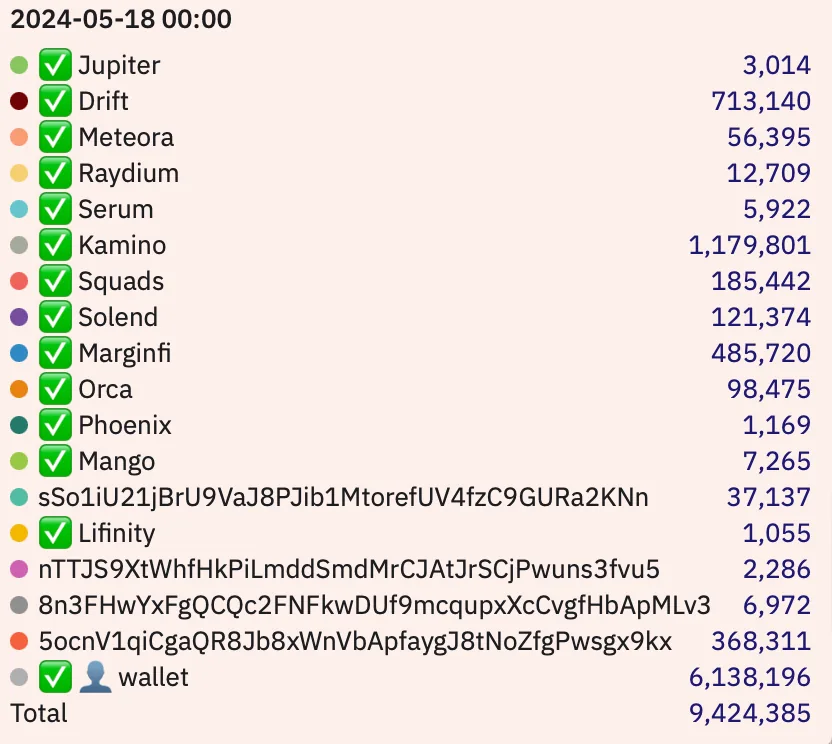
33% of stETH and 35% of JitoSOL supply are in Ethereum and Solana DeFi.
The numbers showcase stSTX quick adoption in Stacks DeFi and its role in helping protocols to bootstrap liquidity. With other DeFi projects to launch in the future, this number is expected to remain stable or even increase.
Liquid Stacking protocols rely on trusted validators for running nodes to decentralize the ecosystem, maximize uptime, and potentially maximize rewards.
The Stacking DAO network comprises 7 enterprise-grade Signers, including Luganodes, Chorus One, Blockdaemon, and others.
Is this enough?
Jito also started delegating to only 6 validators and added others only a few months later.
Even according to the Luganodes team, starting with a set of around 6 to 12 validators is the best choice as it facilitates coordination in the early stages, and only later on it makes sense to increase the validators over time.
Stacking DAO had a strong start in TVL growth and adoption of stSTX within Stacks.
Yet there is still a large margin of growth, considering:
Mint stSTX today and earn up to 10% yield on your STX: https://app.stackingdao.com/
Follow us on Twitter to always be up to date on Stacking DAO: https://twitter.com/StackingDao
For any questions or support, join our Telegram community: https://t.me/+0jPjegAOoMwyNTU0
The latest news, product updates, thought leadership, and more from the StackingDAO team.
Bitcoin Staking launches on Stacks on September 10 through the Genesis Bond, opening a new way to earn Bitcoin denominated yield.
Stacking DAO Cycle updates is the perfect format for the community to explore the latest news and milestones.
Stacking DAO Cycle updates is the perfect format for the community to explore the latest news and milestones.